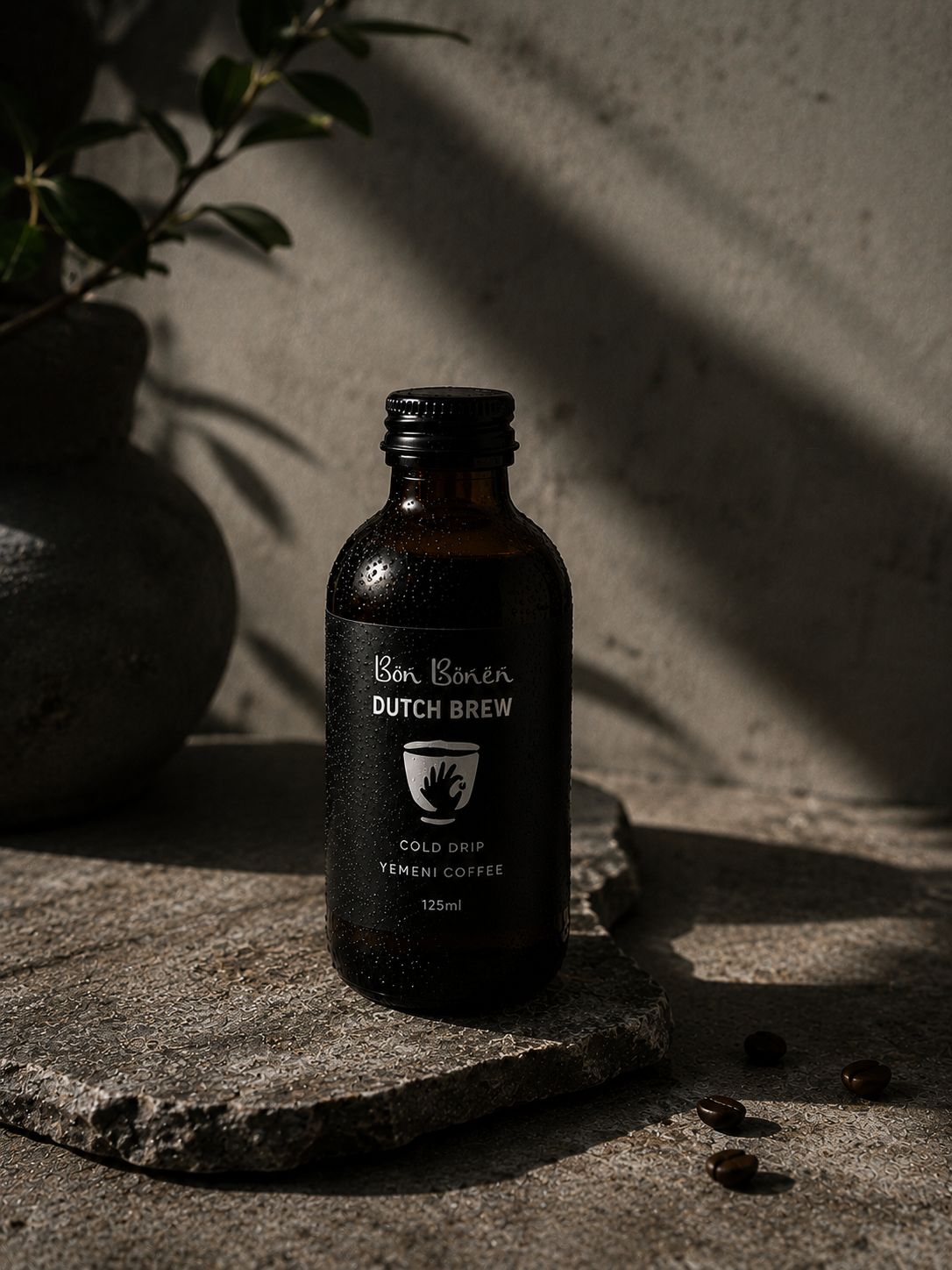
Crafted Drop by Drop.
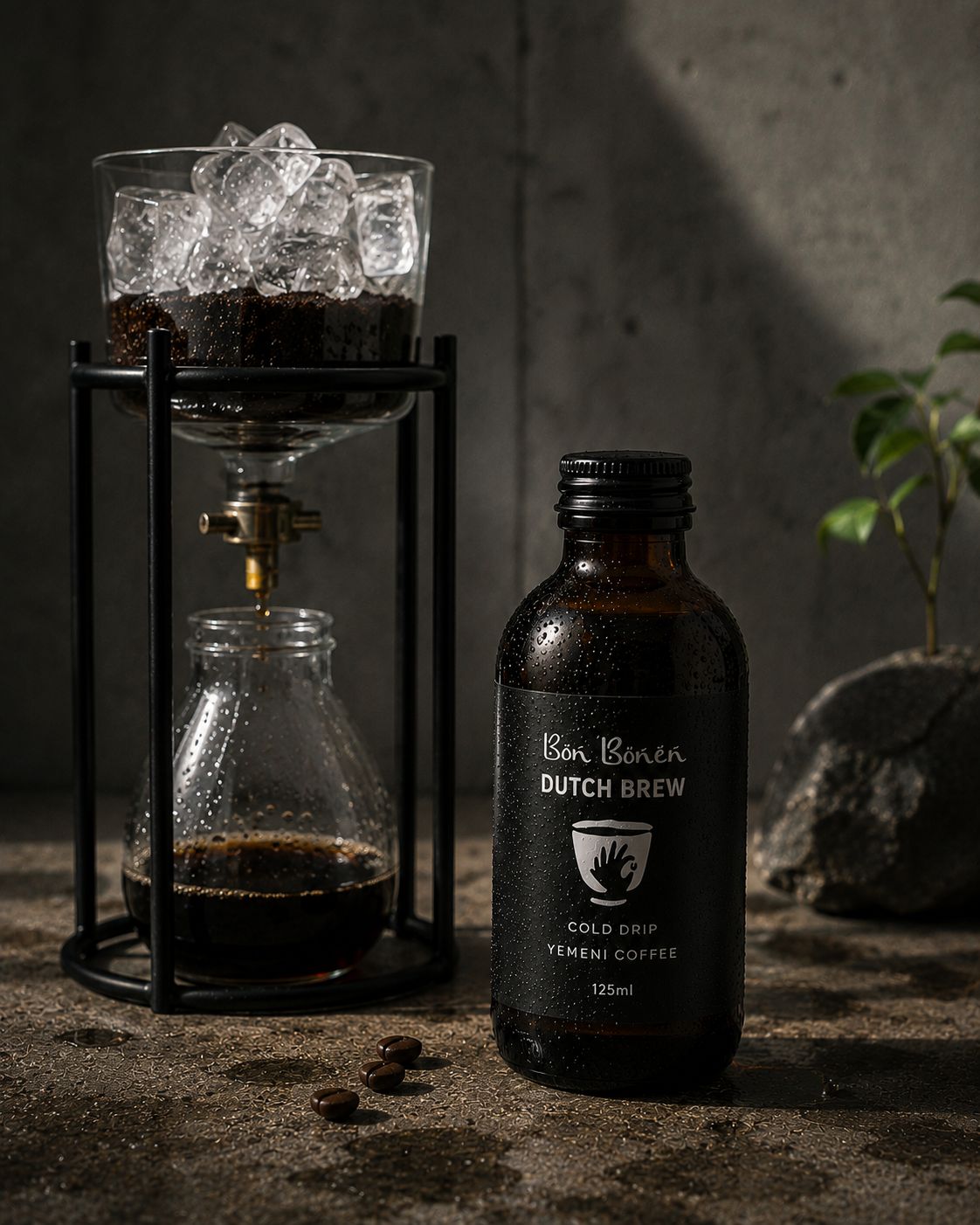
Bon Bonen Dutch Coffee is brewed using ice-cold water through a slow cold-drip process inspired by centuries old Dutch brewing traditions.
The slow drip process reduces bitterness while preserving delicate aromatics and clarity, creating a refreshing and deeply flavorful coffee experience.
Unlike traditional cold brew, Dutch Brew offers a more refined structure, brighter flavor separation, and a naturally smooth finish without dilution.
Crafted for those who appreciate specialty coffee at its finest.
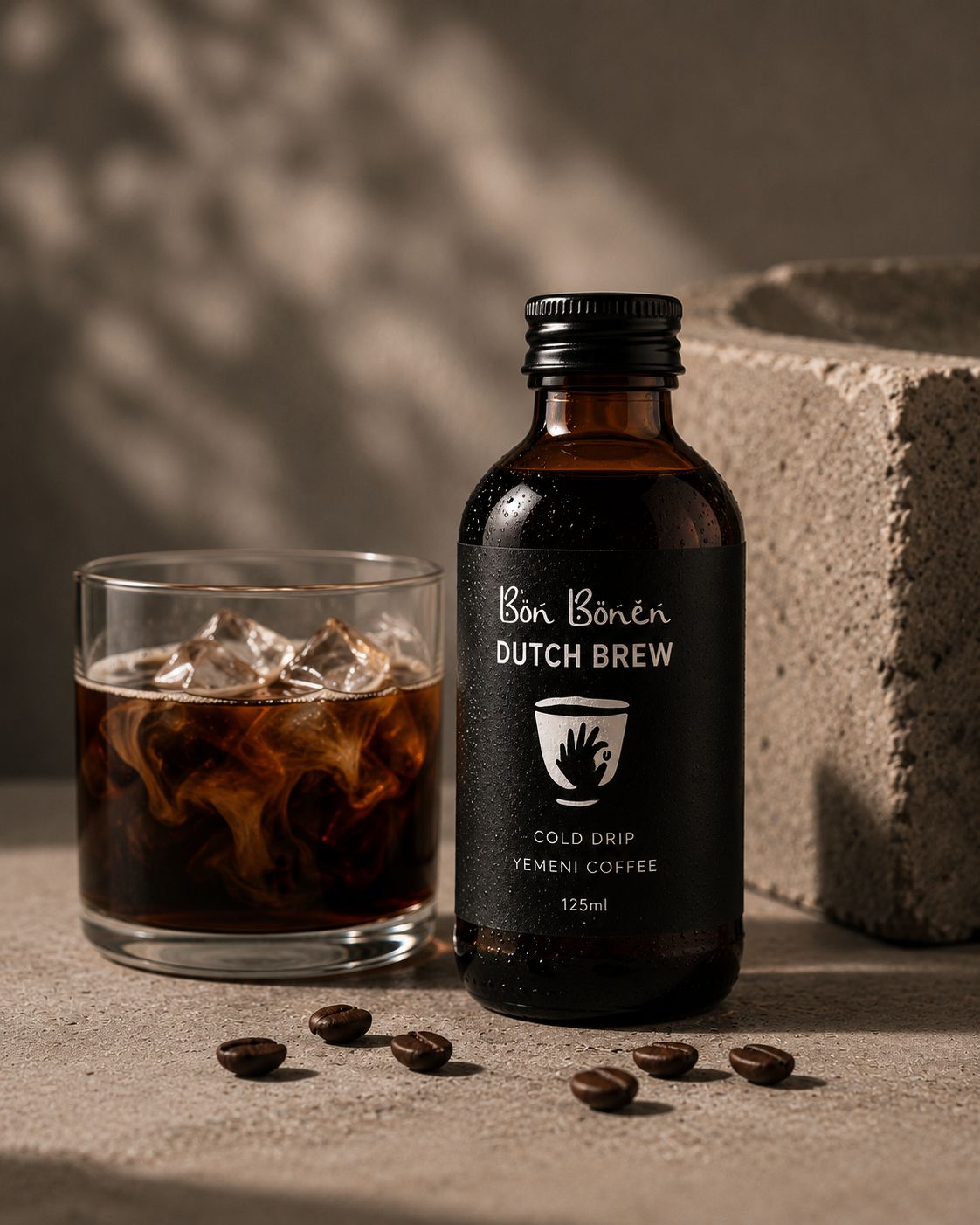
Dutch Brew
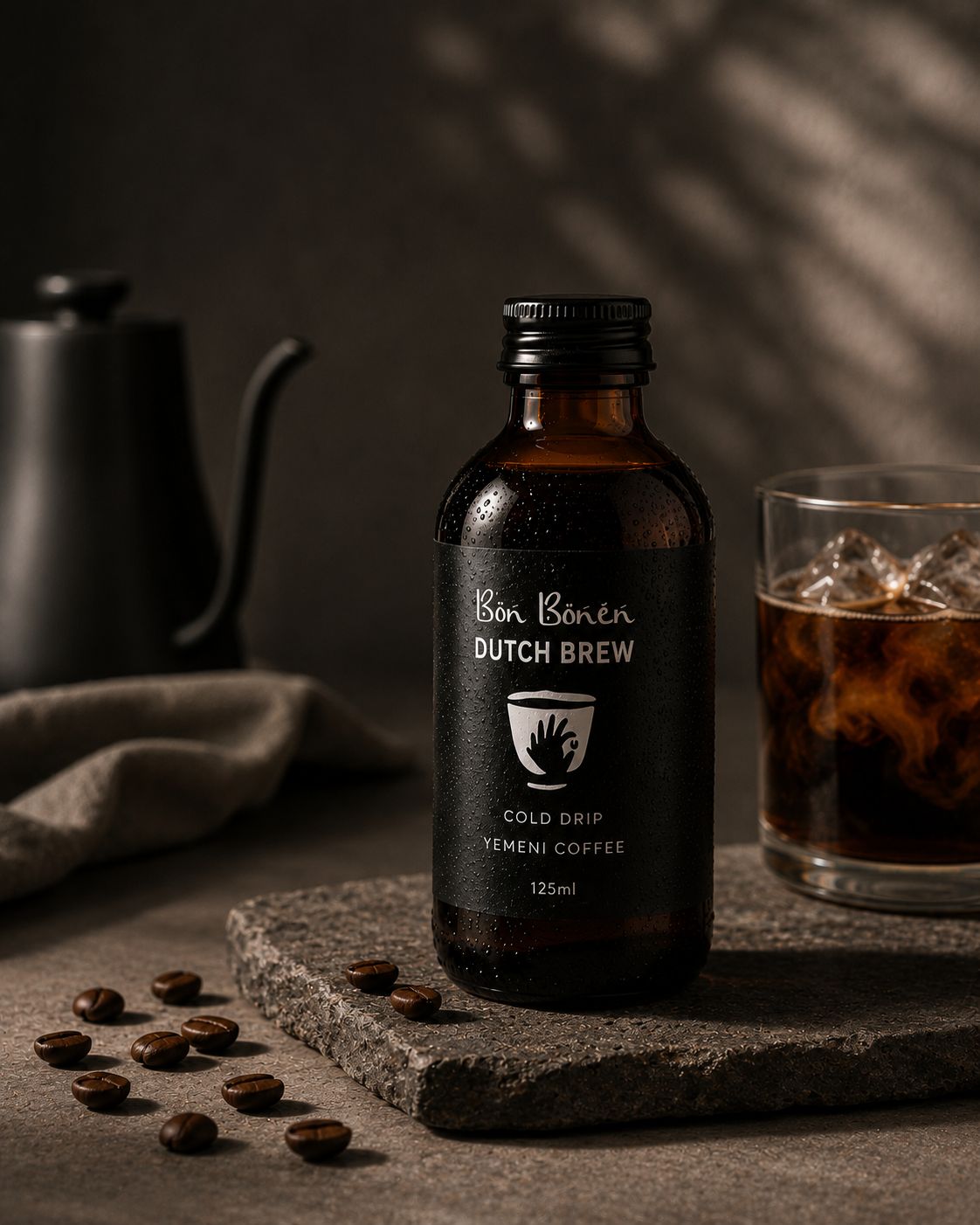
Yemeni Dutch Brew is coffee brewed in 18 hours ice cold water drips through our freshly roasted and grounded high-altitude Yemeni specialty coffee from the mountains of Bura, Yemen.
This coffee is grown between 1900 and 2000 meters by farmer Mohammed Hassan Al-Burai and processed using anaerobic fermentation, creating a vibrant and layered flavor profile with exceptional clarity.
This Dutch Brew highlights the expressive character of Yemeni specialty coffee through slow cold extraction. Expect a clean and balanced cup with notes of: Berry , Cherry , Orange , Mango , Floral sweetness
Origin: Bura, Yemen
Farmer: Mohammed Hassan Al-Burai
Altitude: 1900–2000 MASL
Process: Anaerobic
Variety: Arabica, Yemeni Heirloom variety
Extraction: Slow Dutch Drip
Bottle Size: 250ml
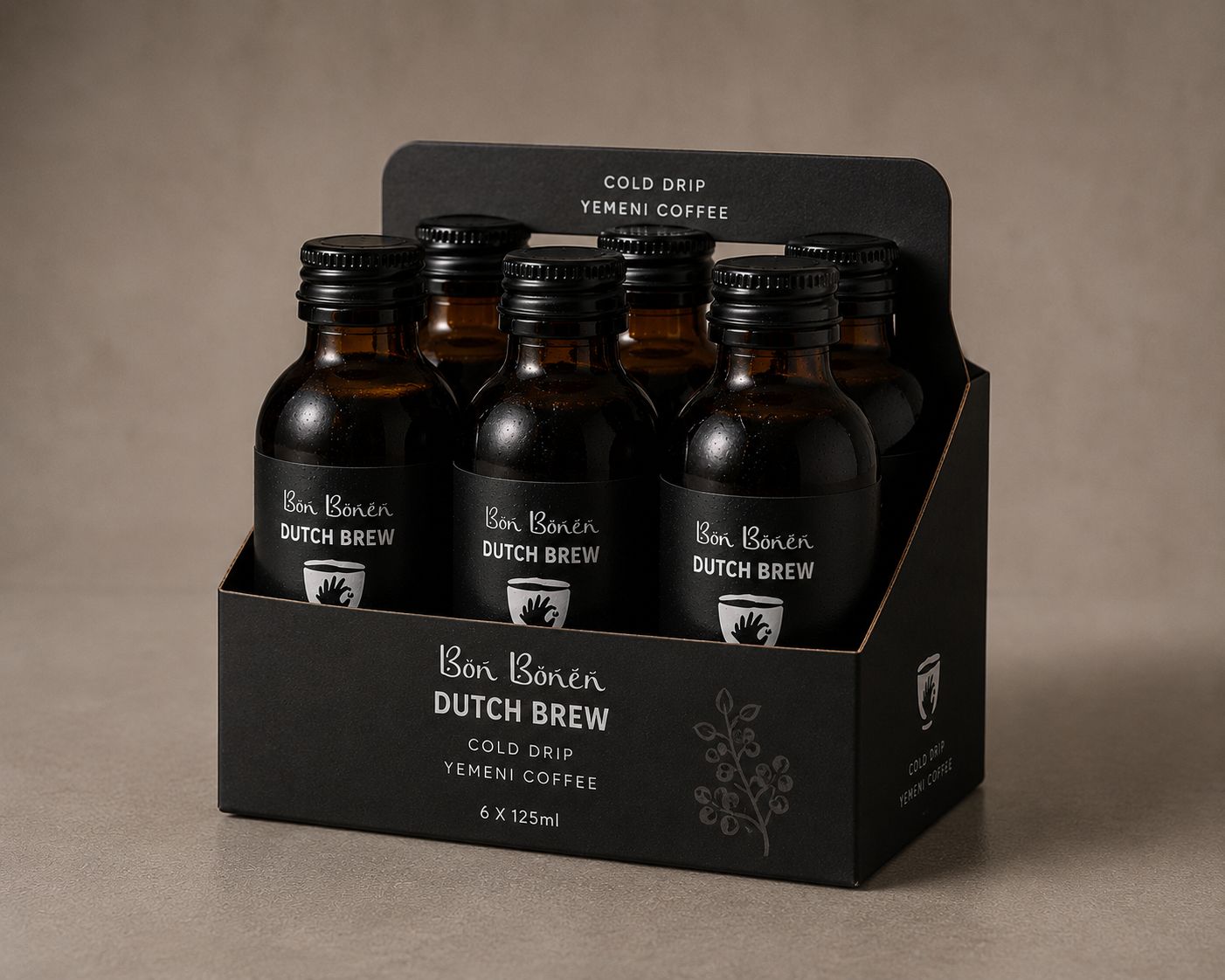
Six bottles Yemeni Dutch Brew Coffee brewed in 18 hours ice cold water drips through our freshly roasted and grounded Yemeni beans.
Farmer: Mohammed Hassan Al-Burai
Altitude: 1900–2000 MASL
Process: Anaerobic
Variety: Arabica, Yemeni Heirloom variety
Extraction: Slow Dutch Drip
Bottle Size: 250ml
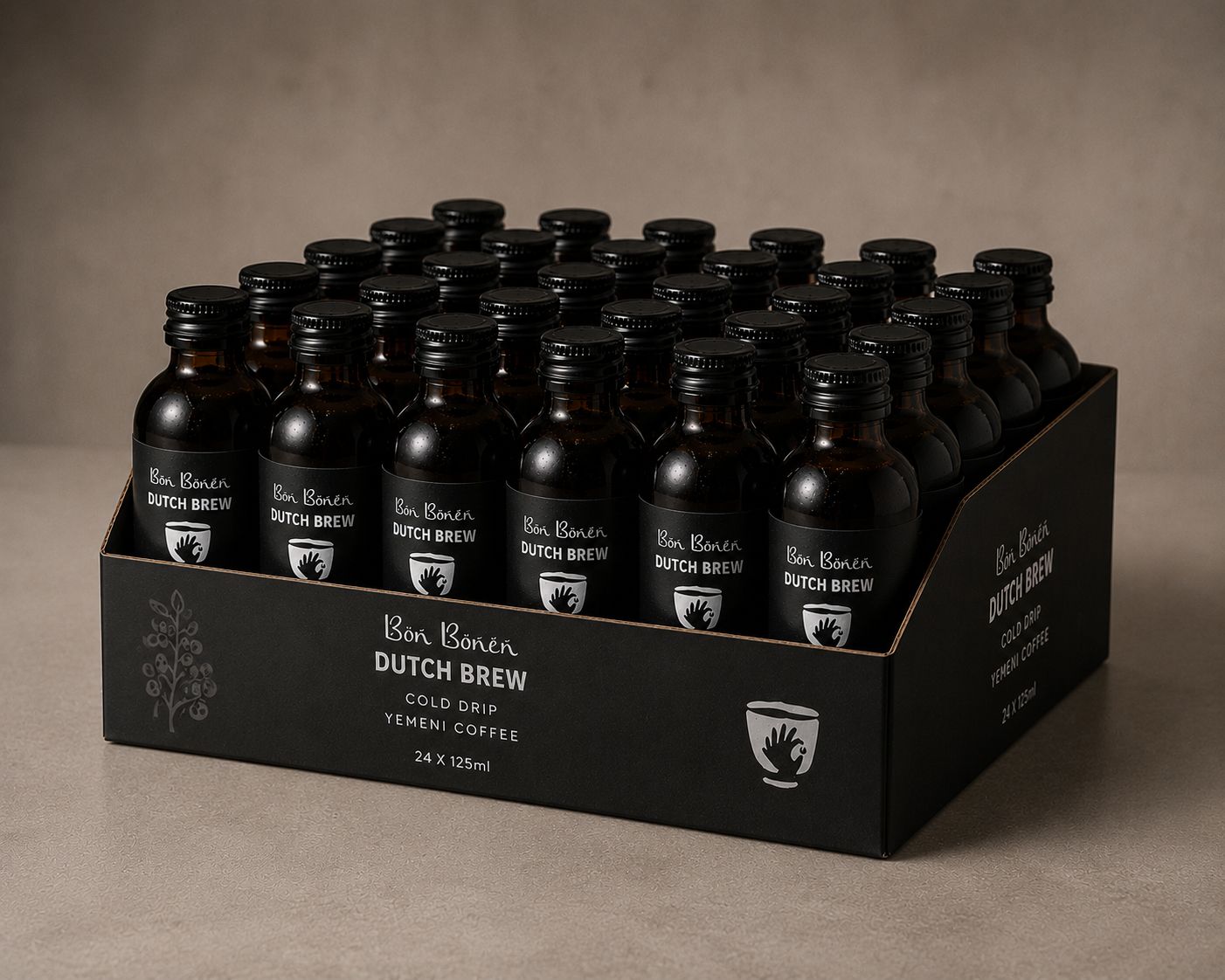
twentyfour bottles Yemeni Dutch Brew Coffee brewed in 18 hours ice cold water drips through our freshly roasted and grounded Yemeni beans.
Farmer: Mohammed Hassan Al-Burai
Altitude: 1900–2000 MASL
Process: Anaerobic
Variety: Arabica, Yemeni Heirloom variety
Extraction: Slow Dutch Drip
Bottle Size: 250ml
Born from Journey, Refined by Time
In the 16th century, Yemeni coffee began its journey from the port of Mocha, reaching new regions through expanding trade routes.
At the time, Yemen carefully protected its coffee monopoly, exporting only roasted or ground beans to protect its monopoly.
As coffee traveled across long sea routes toward Europe and Asia, traders and sailors faced a practical challenge: how to preserve coffee during extended voyages without relying on fire or fresh brewing methods.
One story suggests that during these journeys, cool moisture and slow interaction with water may have inspired early ideas around cold extraction a smoother, more stable way of brewing coffee over time.
Whether legend or reality, the Dutch became closely associated with the evolution of cold coffee brewing. As Dutch trade networks expanded across Asia, particularly through Indonesia and Japan, cold extraction methods continued to develop and refine.
The method eventually became known as “Dutch Coffee” a slow cold-drip brewing technique valued for its clarity, smoothness, and complexity. Today, the term is still used in Japan and Korea (ダッチコーヒー / 더치커피) to describe cold-drip coffee.
What began as a practical idea became known as Dutch Coffee a slow, cold-drip technique that produces a clean, smooth, and complex cup.
-
Dutch Coffee is a centuries-old brewing method using cold water rather than hot. Though it takes 3 to 6 hours to brew, the cold process brings unique advantages gentler acidity, less bitterness, and a lighter feel. Since fats in coffee beans don’t dissolve in cold water, it’s naturally low-calorie. It’s the perfect choice for those who prefer pure, unsweetened coffee over sugary iced drinks.
-
The slow, patient brewing of Dutch Coffee draws out every nuance. You’ll taste delicate fruity notes with a hint of chocolate-like richness. It reveals coffee in its purest form, offering flavors you won’t find in hot brews. This is why in some regions, Dutch Coffee is called the “wine of coffee.” Aromas that vanish with heat are preserved, releasing an explosion of taste when it warms on your palate.
-
The main difference between cold brew and cold drip coffee lies in how the coffee is extracted.
Cold brew is made by steeping coffee grounds in cold or room-temperature water for a long period, usually 18 to 24 hours. This immersion method creates a smooth, low-acidity coffee with a soft and slightly sweet flavor. It is often brewed as a concentrate and diluted before drinking.
Cold drip, on the other hand, uses a slow dripping process where cold water passes through the coffee grounds drop by drop. This method takes several hours and requires more precision, but it produces a cleaner, more refined cup with greater clarity in flavor.
While both methods result in less bitterness and acidity compared to hot coffee, cold brew is generally fuller and softer, whereas cold drip is lighter, more structured, and highlights the unique characteristics of the beans more clearly.